US-Iran Deal: Stunning Trump Breakthrough Tomorrow


US-Iran deal talk has jolted global diplomacy back into the spotlight, but the biggest story right now is not certainty — it is how much remains unclear.
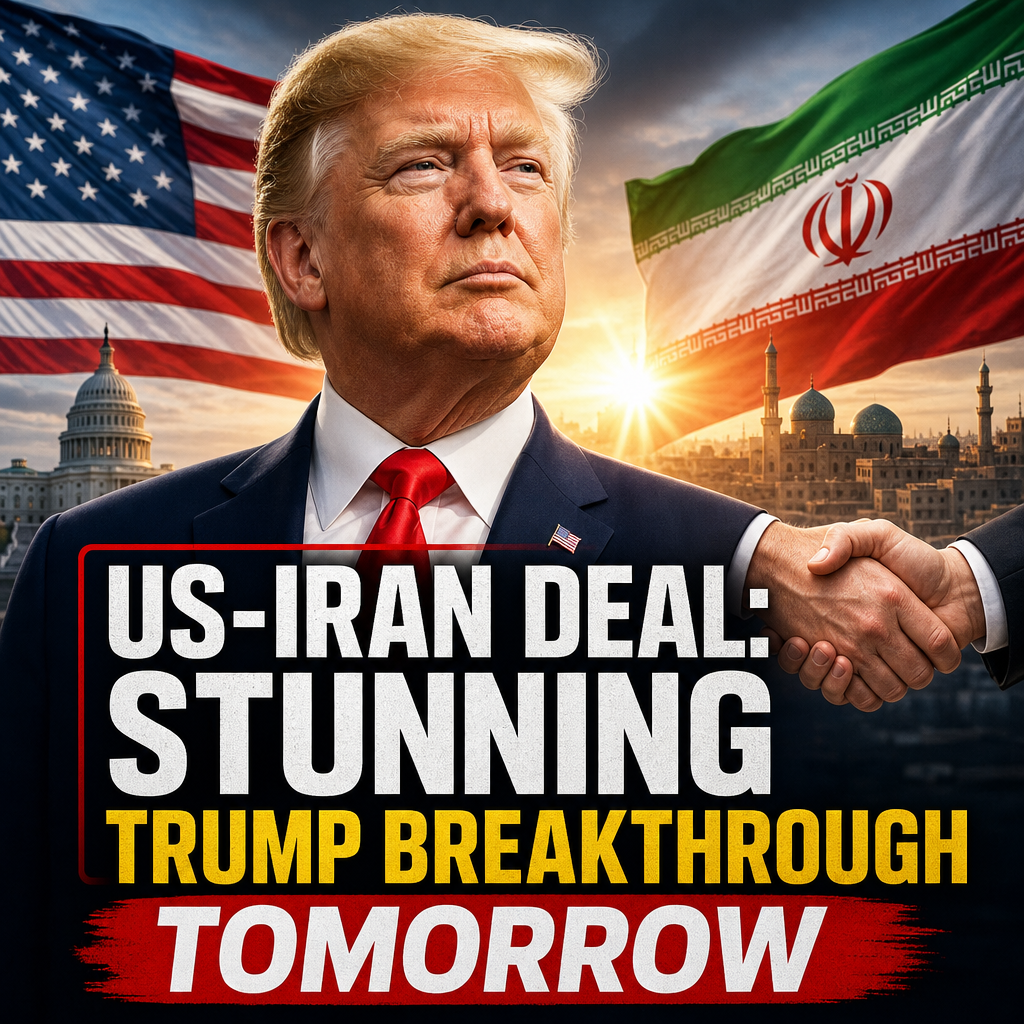
US President Donald Trump’s claim that a deal with Iran will be signed “tomorrow” has instantly raised hopes of a breakthrough, yet the reporting around it suggests a far more complicated picture. Across the coverage, one theme stands out: this is a high-stakes moment, but the terms, timing, and even the durability of any agreement are still far from settled.



A surprise claim that changed the mood
Trump’s announcement matters because of who is making it and when. A U.S.-Iran deal would be a major development on its own; coming from Trump, it carries extra weight because his foreign-policy style has often leaned on dramatic public declarations, leverage, and rapid dealmaking. That makes the statement energizing for supporters of diplomacy, but it also invites caution from analysts who have seen similar headline-grabbing moments fail to translate into lasting agreements.
The immediate reaction across the news landscape appears to split into three broad interpretations:




– Optimistic reading: the two sides may have reached a real opening after prolonged tension.
– Skeptical reading: the claim could be a negotiating tactic or an incomplete picture of talks still in progress.
– Pragmatic reading: even if a deal is announced, implementation will be the true test.
That third view is especially important. In U.S.-Iran relations, a signed document is only the beginning. Past agreements have shown that political resistance, verification disputes, and regional instability can quickly weaken even the most promising diplomatic progress.
What the different news lenses suggest
Coverage from Al Jazeera, Sky News, and RT points to different emphases, which is useful because it helps reveal the complexity behind the headline.
Al Jazeera’s reporting tends to frame U.S.-Iran diplomacy through the wider regional and humanitarian consequences. That perspective matters because any agreement between Washington and Tehran affects more than bilateral relations. It can influence sanctions, energy markets, the security calculations of Gulf states, and the broader atmosphere in conflict zones across the Middle East. In that context, a breakthrough is never just about Washington and Tehran; it can ripple outward quickly.
Sky News, by contrast, typically places more weight on the political and strategic implications for Western audiences. That lens encourages questions about whether the announcement signals a genuine policy shift, a domestic political win for Trump, or a short-term move with long-term uncertainty. From that angle, the key issue is not simply whether a deal exists, but whether it can survive scrutiny at home and abroad.
RT’s coverage usually highlights the geopolitical balance of power and skepticism toward U.S. policy framing. That angle tends to push readers to ask whether the agreement is being presented as a triumph of diplomacy while deeper tensions remain unresolved. It also underscores a broader point: for many international observers, U.S.-Iran negotiations are never viewed in isolation from American influence, sanctions pressure, and regional rivalries.
Taken together, these perspectives do not cancel each other out. Instead, they show why this story should not be read as a simple yes-or-no moment.
Why a deal with Iran is so difficult to judge
There are several reasons this announcement should be treated carefully.
1. The details matter more than the headline
A deal can mean many different things: a prisoner swap, a sanctions-related arrangement, a temporary de-escalation, or a broader nuclear or security understanding. Without the text, scope, and enforcement mechanism, it is impossible to know how significant the reported agreement really is.
2. Trust remains fragile
U.S.-Iran relations have been shaped by decades of hostility, mutual distrust, and broken expectations. Even if negotiators have found common ground, both sides will likely worry about whether the other can or will stick to the terms.
3. Regional actors will react fast
Israel, Gulf states, European governments, and others will all be assessing whether the deal improves stability or simply rearranges the pressure points. A positive announcement could cool tensions, but it could also trigger new concerns if neighbors feel left out or threatened.
4. Domestic politics can derail diplomacy
Any U.S.-Iran agreement has to survive political criticism in Washington. Trump’s supporters may welcome the image of a strong dealmaker, but critics may question whether the terms are too loose, too rushed, or politically motivated.
A breakthrough, but not yet a conclusion
The most balanced reading is that this is a potentially important diplomatic opening — not a finished success story.
If a US-Iran deal is indeed about to be signed, that would be a significant move in a relationship that has been defined by confrontation for years. It could ease pressure, reduce immediate risk, and create room for further talks. But until the terms are public and independently assessable, the news should be treated as a development, not a resolution.
That is the real tension in this story: the world may be seeing the first visible sign of progress, or only the latest stage in a familiar cycle of dramatic claims and uncertain follow-through. For now, the sensible position is cautious optimism. The possibility of diplomacy is real. So is the possibility that the hardest part still lies ahead.